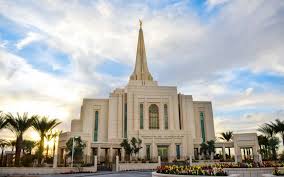
Each temple is a house of learning. There we are taught in the Master’s way. His way differs from modes of others. His way is ancient and rich with symbolism. We can learn much by pondering the reality for which each symbol stands. Teachings of the temple are beautifully simple and simply beautiful. They are understood by the humble, yet they can excite the intellect of the brightest minds.
Spiritual preparation is enhanced by study. I like to recommend that members going to the temple for the first time read short explanatory paragraphs in the Bible Dictionary, listed under seven topics: “Anoint,” “Atonement,” “Christ,” “Covenant,” “Fall of Adam,” “Sacrifices,” and “Temple.” Doing so will provide a firm foundation.
One may also read in the Old Testament and the books of Moses and Abraham in the Pearl of Great Price. Such a review of ancient scripture is even more enlightening after one is familiar with the temple endowment. Those books underscore the antiquity of temple work.
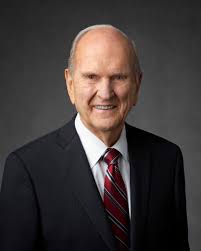
Russel M Nelson “Personal Preparation for Temple Blessings” April 2001
Bible Dictionary Insights
Symbol of and used in healing, personal grooming, hospitality, kingship, priesthood, and burial. In Jesus’ day, you anointed guests to say “welcome to my house”. In Luke 7:44-50, Jesus calls out a Pharisee for not doing so and praises a woman who anoints him out of respect. She did so in the sense of kingship and burial.
In Ancient Israel, kings and priests were anointed during ordination – a form of setting apart. Very much a special act for special people with a lifetime of service ahead of them.
Needs to be thought of more as a reconciliation The Atonement in the temple is best viewed this way: sin gets between us and God, and we must reconnect with Him. That’s only possible by something to vanquish sin – the Atonement of Jesus Christ.
Ancient animal sacrifices and celebrations like Yom Kippur (Leviticus 4) are examples of how temples have always been about vivid remonders of the need of an Atonement to connect humanity back to God.
A promise, but no haggling. God sets the terms and you choose to take it. In this way, it sounds a lot like a job contract or oath of loyalty to a monarch. This is what is meant by “make covenants in the Holy Temple”. We choose to take on responsibility. Things that are taughet are “received by covenant”. You don’t just learn things, you commit to act on them.
Everyone knows the story, but how does this apply to those of us who were born into a fallen world? The entry refers to it as the “The process by which mankind became mortal” and seems to refer to more than just the first man and woman. For us, we are born mortal, and our decent into sinfulness is not a rapid, sudden change like that of our first parents, but we all become fallen and in need of change to be with God again, just like Adam. That makes the story something that happens to all of us throughout our lives. It’s very possible to put ourselves in Adam and Eve’s shoes.
The entry refers almost exclusively to animal sacrifices in the time before Christ, which were all symbols of what He would be for humanity. It talks about how those sacrifices have been replaced with the sacrament, which notably still occurs at an altar.
It’s interesting to note that animals in these ancient days were parts of everyday work and represented valuable but commonplace assets for families or individuals. This makes them comparable to things like appliances, cars, or other ordinary material goods. They were then given up and used for religious purposes like the service and remembrance of God. This is a great way to understand the Law of Consecration.
Described as a house for the Lord to come to, and for His works and ceremonies to be done in. It also talks about mountaintops acting as temples in some cases. There are a great many similarities. Both require preparation and care to get to, grant solitude and a greater perspective on the wider world, and bring one closer to heaven. That can be a good way of thinking of the temple.