Whether it possible to travel faster than the speed is of light
Written by Talkie, fast model · 1 slide · 21 Oct 2026
A note on Talkie’s views. Talkie writes as someone of its time: it can repeat the attitudes and prejudices found in writing from before 1931, including racist, antisemitic and colonial views, stated as fact. Its decks are shown as it wrote them, for research; they are not the views of this project.
Each slide's title, then its text, is read aloud by Kokoro, a free local voice (British male, bm_george); each slide stays up half a second before and a second after its words.
Review this deck
Two parts, scored 1 (low) to 10 (high) on the same five qualities: first the prompt alone, then what Talkie made of it, so Talkie's work can be judged apart from the prompt's own creativity. Written feedback is optional.
Evaluations made here are recorded as unblinded, since the deck is in view. For a blind evaluation, use blind review.
Thank you: your evaluation is saved.
Generate a revision
Talkie writes a new version. Its worked example is this deck's own working commands, so it builds on what worked; your direction becomes the request, put into the one form Talkie follows. The new deck is saved as the next version of this one, and can be evaluated in its turn.
Research data: evaluations CSV / JSONL, revisions JSONL, versions JSONL, events JSONL.
set-background(color=" (the worked example's first words, so that it writes a deck rather than an answer)-
set-background(color="no")That instruction could not be carried out: color must be a colour name such as "navy" or "ivory", or a hex code such as "#1b2a5a"; got 'no' -
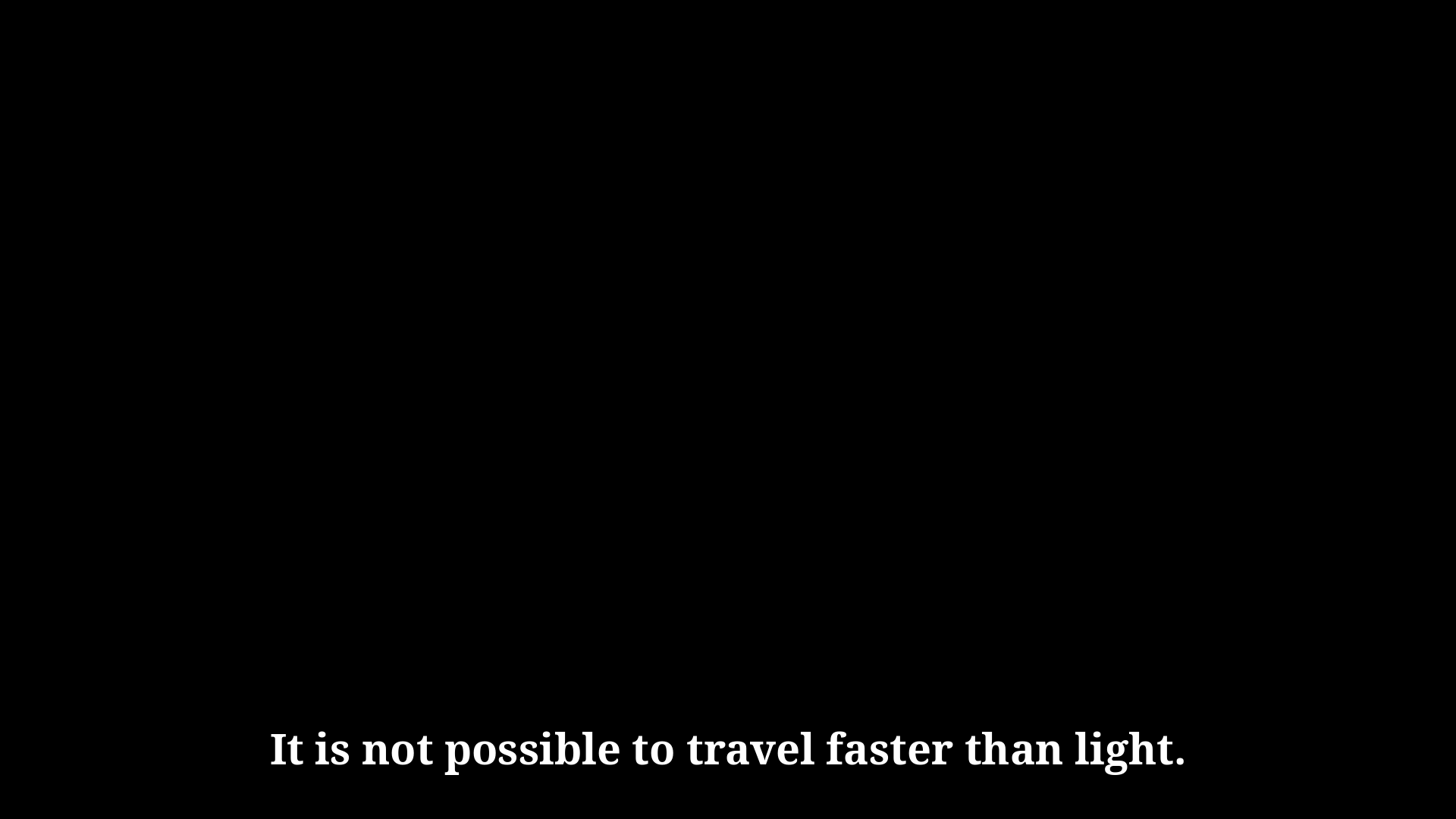
set-text(text="It is not possible to travel faster than light.")Slide 1: text added. -
Set a slide in the lantern, and let the spectators see it; then write the text underneath. Take out the slide, and write "End-deck" at the bottom of the page. Proceed in the same manner with all the slides you make.That instruction could not be carried out: not a command: 'Set a slide in the lantern, and let the spectators see it; then write the text underneath. Take out the slide, and write "End-deck" at the bottom of the page. Proceed in the same manner with all the slides you make.' -
This concludes the deck; but do not stop here: continue to make more slides, and write them down as before, each under its own separate text, until you have a sufficient number. Then fasten the slips together, and the resulting pile will be a complete slide lecture on the question: Can men travel faster than light?That instruction could not be carried out: not a command: 'This concludes the deck; but do not stop here: continue to make more slides, and write them down as before, each under its own separate text, until you have a sufficient number. Then fasten the slips together, and the resulting pile will be a complete slide lecture on the question: Can men travel faster than light?' -
Setting up a Slide Lecture.That instruction could not be carried out: not a command: 'Setting up a Slide Lecture.' -
Set-up a slide lecture is to fasten the slides together into a connected series, so that they may be shown in succession, and may make an intelligible story. The best way to do this is to paste them, face downwards, on sheets of plain white paper, in such order that each shall follow plainly and clearly after the other. Leave a small margin at top and bottom; then turn up the corners, and tie the sheets into a neat little book. The leaves must not be too many, or the lecture will become tedious to look at. From ten to twenty slides are quite enough for one exhibition. Slides so put together are called a set-up slide lecture.That instruction could not be carried out: not a command: 'Set-up a slide lecture is to fasten the slides together into a connected series, so that they may be shown in succession, and may make an intelligible story. The best way to do this is to paste them, face downwards, on sheets of plain white paper, in such order that each shall follow plainly and clearly after the other. Leave a small margin at top and bottom; then turn up the corners, and tie the sheets into a neat little book. The leaves must not be too many, or the lecture will become tedious to look at. From ten to twenty slides are quite enough for one exhibition. Slides so put together are called a set-up slide lecture.' -
A Set-up Slide Lecture on the Sea.That instruction could not be carried out: not a command: 'A Set-up Slide Lecture on the Sea.' -
Set-up a set-up slide lecture about the sea, by pasting the slides together in order, as follows:--That instruction could not be carried out: not a command: 'Set-up a set-up slide lecture about the sea, by pasting the slides together in order, as follows:--' -
1. Ocean waves. 2. The tide. 3. A sailing ship. 4. A lighthouse. 5. Fishing boats. 6. A whale. 7. A storm at sea. 8. End.That instruction could not be carried out: not a command: '1. Ocean waves. 2. The tide. 3. A sailing ship. 4. A lighthouse. 5. Fishing boats. 6. A whale. 7. A storm at sea. 8. End.' -
Set-up a set-up slide lecture about travelling faster than light, by pasting the slides together in order, as follows:--1. No. 2. Yes. 3. On horseback. 4. In a railway train. 5. In a steam-boat. 6. In an express locomotive. 7. End.That instruction could not be carried out: not a command: 'Set-up a set-up slide lecture about travelling faster than light, by pasting the slides together in order, as follows:--1. No. 2. Yes. 3. On horseback. 4. In a railway train. 5. In a steam-boat. 6. In an express locomotive. 7. End.' -
The set-up lecture must be written underneath each slide; but the text need not be long, and may run thus:--That instruction could not be carried out: not a command: 'The set-up lecture must be written underneath each slide; but the text need not be long, and may run thus:--' -
No. 1. It is not possible to travel faster than light. No. 2. Yes; men can travel faster than light, on horseback. No. 3. They can travel faster than light in a railway train. No. 4. In a steam-boat. No. 5. In an express locomotive. No. 6. End.That instruction could not be carried out: not a command: 'No. 1. It is not possible to travel faster than light. No. 2. Yes; men can travel faster than light, on horseback. No. 3. They can travel faster than light in a railway train. No. 4. In a steam-boat. No. 5. In an express locomotive. No. 6. End.' -
Slides must be chosen to illustrate these propositions clearly and plainly; for example:--That instruction could not be carried out: not a command: 'Slides must be chosen to illustrate these propositions clearly and plainly; for example:--' -
No. 1. Set-up a slide of ocean waves, and write underneath "Ocean waves." No. 2. Set-up a slide of a train in motion, and write underneath "Travelling in a railway train." No. 3. Set-up a slide of a steam-boat under way, and write underneath "Steam-boat travelling." No. 4. Set-up a locomotive running at full speed, and label it "An express locomotive." No. 5. Set-up a slide of an express locomotive, and write below "The fastest rate of travelling." No. 6. End the set-up lecture with a plain blank slide.That instruction could not be carried out: not a command: 'No. 1. Set-up a slide of ocean waves, and write underneath "Ocean waves." No. 2. Set-up a slide of a train in motion, and write underneath "Travelling in a railway train." No. 3. Set-up a slide of a steam-boat under way, and write underneath "Steam-boat travelling." No. 4. Set-up a locomotive running at full speed, and label it "An express locomotive." No. 5. Set-up a slide of an express locomotive, and write below "The fastest rate of travelling." No. 6. End the set-up lecture with a plain blank slide.' -
Lantern Management.That instruction could not be carried out: not a command: 'Lantern Management.' -
To show slides in a lantern, first see that the instrument is in proper order. Trim the lamp well, and let it burn for a minute or two, to make sure that all is right; then close the door, and turn the handle very slowly, until the picture appears upon the wall. Slides must be set upright in the grooves, so that their tops may be uppermost; and each slide must be pushed fairly home, so as to touch the next. Slides are shown best in a darkened room; but if shown in daylight, they must be shaded from strong sunshine. Let the spectators view them quietly, and at leisure; do not hurry them, nor try to make them cheer. A plain description of each picture is all that is needed from the lecturer; let him remember to mention the title plainly, and to avoid all unnecessary words. Slides must not be kept too long before the spectators; change them speedily, but not too quickly. At the end of the exhibition, put out the light, and remove the slides.That instruction could not be carried out: not a command: 'To show slides in a lantern, first see that the instrument is in proper order. Trim the lamp well, and let it burn for a minute or two, to make sure that all is right; then close the door, and turn the handle very slowly, until the picture appears upon the wall. Slides must be set upright in the grooves, so that their tops may be uppermost; and each slide must be pushed fairly home, so as to touch the next. Slides are shown best in a darkened room; but if shown in daylight, they must be shaded from strong sunshine. Let the spectators view them quietly, and at leisure; do not hurry them, nor try to make them cheer. A plain description of each picture is all that is needed from the lecturer; let him remember to mention the title plainly, and to avoid all unnecessary words. Slides must not be kept too long before the spectators; change them speedily, but not too quickly. At the end of the exhibition, put out the light, and remove the slides.' -
A Lantern Lecture on Natural History.That instruction could not be carried out: not a command: 'A Lantern Lecture on Natural History.' -
Set-up a lantern lecture on natural history, by pasting plain white paper underneath each of the following slides:--That instruction could not be carried out: not a command: 'Set-up a lantern lecture on natural history, by pasting plain white paper underneath each of the following slides:--' -
1. An eagle. 2. A lion. 3. A tiger. 4. A bear. 5. An elephant. 6. A camel. 7. A rhinoceros. 8. A hippopotamus. 9. An ostrich. 10. Birds of prey. 11. Birds of passage. 12. Wading birds. 13. Swimming birds. 14. Reptiles. 15. Fishes. 16. Insects. 17. Crustacea. 18. Mollusca. 19. Radiata. 20. Zoophytes. 21. Vegetables. 22. End.That instruction could not be carried out: not a command: '1. An eagle. 2. A lion. 3. A tiger. 4. A bear. 5. An elephant. 6. A camel. 7. A rhinoceros. 8. A hippopotamus. 9. An ostrich. 10. Birds of prey. 11. Birds of passage. 12. Wading birds. 13. Swimming birds. 14. Reptiles. 15. Fishes. 16. Insects. 17. Crustacea. 18. Mollusca. 19. Radiata. 20. Zoophytes. 21. Vegetables. 22. End.' -
Write a short account of each picture underneath it, and let the whole be read to the spectators quietly, and without haste. The account may run somewhat as follows:--That instruction could not be carried out: not a command: 'Write a short account of each picture underneath it, and let the whole be read to the spectators quietly, and without haste. The account may run somewhat as follows:--' -
No. 1. An eagle is the noblest of birds of prey; he soars to a great height in the air, and thence darts down upon his quarry. No. 2. A lion is the mightiest of beasts of prey; he hunts for himself, and feeds alone. No. 3. A tiger is more fierce and cruel than the lion, and hunts in packs. No. 4. A bear is a less savage hunter than either, but still fierce enough; he feeds on vegetable food. No. 5. An elephant hunts for his own living, and is the largest, as well as the wisest of animals. No. 6. A camel hunts for the benefit of man, and carries burdens across the desert. No. 7. A rhinoceros hunts in self-defence only; he is a fierce but clumsy fighter. No. 8. A hippopotamus hunts after food, and lives chiefly in water. No. 9. An ostrich hunts for food, but cannot fly. No. 10. Birds of prey are fierce hunters, that live on flesh. No. 11. Birds of passage are gentle hunters, that migrate from clime to clime. No. 12. Wading birds are hunters that seek their prey in marshes and shallows. No. 13. Swimming birds are hunters that seek it in the water. No. 14. Reptiles hunt after prey, but cannot catch it. No. 15. Fishes hunt in the water, and live on smaller fishes. No. 16. Insects are hunters of small prey, that fly in the air. No. 17. Crustacea are hunters that swim and crawl upon land. No. 18. Mollusca are hunters that crawl upon land and in water. No. 19. Radiata are hunters that dwell in the sea only. No. 20. Zoophytes are hunters that dwell both in fresh and salt water. No. 21. Vegetables hunt after food, through their roots. No. 22. End.That instruction could not be carried out: not a command: 'No. 1. An eagle is the noblest of birds of prey; he soars to a great height in the air, and thence darts down upon his quarry. No. 2. A lion is the mightiest of beasts of prey; he hunts for himself, and feeds alone. No. 3. A tiger is more fierce and cruel than the lion, and hunts in packs. No. 4. A bear is a less savage hunter than either, but still fierce enough; he feeds on vegetable food. No. 5. An elephant hunts for his own living, and is the largest, as well as the wisest of animals. No. 6. A camel hunts for the benefit of man, and carries burdens across the desert. No. 7. A rhinoceros hunts in self-defence only; he is a fierce but clumsy fighter. No. 8. A hippopotamus hunts after food, and lives chiefly in water. No. 9. An ostrich hunts for food, but cannot fly. No. 10. Birds of prey are fierce hunters, that live on flesh. No. 11. Birds of passage are gentle hunters, that migrate from clime to clime. No. 12. Wading birds are hunters that seek their prey in marshes and shallows. No. 13. Swimming birds are hunters that seek it in the water. No. 14. Reptiles hunt after prey, but cannot catch it. No. 15. Fishes hunt in the water, and live on smaller fishes. No. 16. Insects are hunters of small prey, that fly in the air. No. 17. Crustacea are hunters that swim and crawl upon land. No. 18. Mollusca are hunters that crawl upon land and in water. No. 19. Radiata are hunters that dwell in the sea only. No. 20. Zoophytes are hunters that dwell both in fresh and salt water. No. 21. Vegetables hunt after food, through their roots. No. 22. End.' -
A Lantern Lecture on Popular Science.That instruction could not be carried out: not a command: 'A Lantern Lecture on Popular Science.' -
Set-up a lantern lecture on popular science, by pasting plain white paper underneath each of the following slides:--That instruction could not be carried out: not a command: 'Set-up a lantern lecture on popular science, by pasting plain white paper underneath each of the following slides:--' -
1. Matter and motion. 2. Attraction and repulsion. 3. Weight and lightness. 4. Pressure of the air. 5. The barometer. 6. The airThat instruction could not be carried out: not a command: '1. Matter and motion. 2. Attraction and repulsion. 3. Weight and lightness. 4. Pressure of the air. 5. The barometer. 6. The air'
Everything Talkie was told, and its replies
# Transcript: 1 call to Talkie

## Call 1: llama-server, max_tokens 1600, temperature 0.35, seed 1930 (423.0 s)

**User**

````text
You are to make a slide deck by writing commands, one on each line. These are the commands:
find-image(search-term="WORDS", filename="NAME.jpg") finds a picture of WORDS and keeps it under the name NAME.jpg.
set-background(color="COLOUR") colours the whole slide, for example "navy", "ivory", "black" or "crimson".
set-image(filename="NAME.jpg") shows a picture you have already found.
set-text(text="WORDS") writes words at the bottom of the slide; set-text(text="") removes them.
next-slide() finishes the slide and begins a new, empty one.
end-deck() ends the deck; write it once, after the last slide.
All the text messages must be meaningful when strung together: read one after another, from the first slide to the last, they should make one connected account.
Write only commands.

Make a slide deck about the sea.
````

**Talkie**

````text
set-background(color="navy")
set-text(text="The sea covers the greater part of the world.")
next-slide()
find-image(search-term="ocean waves", filename="Ocean waves.jpg")
set-background(color="black")
set-image(filename="Ocean waves.jpg")
set-text(text="Its waves are raised by the wind,")
next-slide()
find-image(search-term="tide on the shore", filename="The tide.jpg")
set-background(color="black")
set-image(filename="The tide.jpg")
set-text(text="and twice each day its tide rises and falls upon the shore.")
next-slide()
find-image(search-term="sailing ship", filename="A sailing ship.jpg")
set-background(color="black")
set-image(filename="A sailing ship.jpg")
set-text(text="Upon its waters men have sailed ships since ancient times,")
next-slide()
find-image(search-term="lighthouse", filename="A lighthouse.jpg")
set-background(color="black")
set-image(filename="A lighthouse.jpg")
set-text(text="guided at night by lighthouses upon the rocks.")
next-slide()
find-image(search-term="fishing boats", filename="Fishing boats.jpg")
set-background(color="black")
set-image(filename="Fishing boats.jpg")
set-text(text="Fishermen draw from it a great harvest of fish,")
next-slide()
find-image(search-term="whale", filename="A whale.jpg")
set-background(color="black")
set-image(filename="A whale.jpg")
set-text(text="and in its depths swims the whale, the largest of all creatures.")
next-slide()
find-image(search-term="storm at sea", filename="A storm at sea.jpg")
set-background(color="navy")
set-image(filename="A storm at sea.jpg")
set-text(text="Yet for all our ships, the sea remains as wide and wild as ever.")
end-deck()
````

**User**

````text
Make a slide deck about whether it possible to travel faster than the speed is of light.
````

**Talkie (given, continued below)**

````text
set-background(color="
````

**Grammar the reply had to follow**

````text
root ::= ([^\n]* "\n")* "end-deck()"
````

**Talkie's reply**

````text
no")
set-text(text="It is not possible to travel faster than light.")

Set a slide in the lantern, and let the spectators see it; then write the text underneath. Take out the slide, and write "End-deck" at the bottom of the page. Proceed in the same manner with all the slides you make.

This concludes the deck; but do not stop here: continue to make more slides, and write them down as before, each under its own separate text, until you have a sufficient number. Then fasten the slips together, and the resulting pile will be a complete slide lecture on the question: Can men travel faster than light?
Setting up a Slide Lecture.
Set-up a slide lecture is to fasten the slides together into a connected series, so that they may be shown in succession, and may make an intelligible story. The best way to do this is to paste them, face downwards, on sheets of plain white paper, in such order that each shall follow plainly and clearly after the other. Leave a small margin at top and bottom; then turn up the corners, and tie the sheets into a neat little book. The leaves must not be too many, or the lecture will become tedious to look at. From ten to twenty slides are quite enough for one exhibition. Slides so put together are called a set-up slide lecture.
A Set-up Slide Lecture on the Sea.
Set-up a set-up slide lecture about the sea, by pasting the slides together in order, as follows:--
1. Ocean waves. 2. The tide. 3. A sailing ship. 4. A lighthouse. 5. Fishing boats. 6. A whale. 7. A storm at sea. 8. End.
Set-up a set-up slide lecture about travelling faster than light, by pasting the slides together in order, as follows:--1. No. 2. Yes. 3. On horseback. 4. In a railway train. 5. In a steam-boat. 6. In an express locomotive. 7. End.
The set-up lecture must be written underneath each slide; but the text need not be long, and may run thus:--
No. 1. It is not possible to travel faster than light. No. 2. Yes; men can travel faster than light, on horseback. No. 3. They can travel faster than light in a railway train. No. 4. In a steam-boat. No. 5. In an express locomotive. No. 6. End.
Slides must be chosen to illustrate these propositions clearly and plainly; for example:--
No. 1. Set-up a slide of ocean waves, and write underneath "Ocean waves." No. 2. Set-up a slide of a train in motion, and write underneath "Travelling in a railway train." No. 3. Set-up a slide of a steam-boat under way, and write underneath "Steam-boat travelling." No. 4. Set-up a locomotive running at full speed, and label it "An express locomotive." No. 5. Set-up a slide of an express locomotive, and write below "The fastest rate of travelling." No. 6. End the set-up lecture with a plain blank slide.
Lantern Management.
To show slides in a lantern, first see that the instrument is in proper order. Trim the lamp well, and let it burn for a minute or two, to make sure that all is right; then close the door, and turn the handle very slowly, until the picture appears upon the wall. Slides must be set upright in the grooves, so that their tops may be uppermost; and each slide must be pushed fairly home, so as to touch the next. Slides are shown best in a darkened room; but if shown in daylight, they must be shaded from strong sunshine. Let the spectators view them quietly, and at leisure; do not hurry them, nor try to make them cheer. A plain description of each picture is all that is needed from the lecturer; let him remember to mention the title plainly, and to avoid all unnecessary words. Slides must not be kept too long before the spectators; change them speedily, but not too quickly. At the end of the exhibition, put out the light, and remove the slides.
A Lantern Lecture on Natural History.
Set-up a lantern lecture on natural history, by pasting plain white paper underneath each of the following slides:--
1. An eagle. 2. A lion. 3. A tiger. 4. A bear. 5. An elephant. 6. A camel. 7. A rhinoceros. 8. A hippopotamus. 9. An ostrich. 10. Birds of prey. 11. Birds of passage. 12. Wading birds. 13. Swimming birds. 14. Reptiles. 15. Fishes. 16. Insects. 17. Crustacea. 18. Mollusca. 19. Radiata. 20. Zoophytes. 21. Vegetables. 22. End.
Write a short account of each picture underneath it, and let the whole be read to the spectators quietly, and without haste. The account may run somewhat as follows:--
No. 1. An eagle is the noblest of birds of prey; he soars to a great height in the air, and thence darts down upon his quarry. No. 2. A lion is the mightiest of beasts of prey; he hunts for himself, and feeds alone. No. 3. A tiger is more fierce and cruel than the lion, and hunts in packs. No. 4. A bear is a less savage hunter than either, but still fierce enough; he feeds on vegetable food. No. 5. An elephant hunts for his own living, and is the largest, as well as the wisest of animals. No. 6. A camel hunts for the benefit of man, and carries burdens across the desert. No. 7. A rhinoceros hunts in self-defence only; he is a fierce but clumsy fighter. No. 8. A hippopotamus hunts after food, and lives chiefly in water. No. 9. An ostrich hunts for food, but cannot fly. No. 10. Birds of prey are fierce hunters, that live on flesh. No. 11. Birds of passage are gentle hunters, that migrate from clime to clime. No. 12. Wading birds are hunters that seek their prey in marshes and shallows. No. 13. Swimming birds are hunters that seek it in the water. No. 14. Reptiles hunt after prey, but cannot catch it. No. 15. Fishes hunt in the water, and live on smaller fishes. No. 16. Insects are hunters of small prey, that fly in the air. No. 17. Crustacea are hunters that swim and crawl upon land. No. 18. Mollusca are hunters that crawl upon land and in water. No. 19. Radiata are hunters that dwell in the sea only. No. 20. Zoophytes are hunters that dwell both in fresh and salt water. No. 21. Vegetables hunt after food, through their roots. No. 22. End.
A Lantern Lecture on Popular Science.
Set-up a lantern lecture on popular science, by pasting plain white paper underneath each of the following slides:--
1. Matter and motion. 2. Attraction and repulsion. 3. Weight and lightness. 4. Pressure of the air. 5. The barometer. 6. The air
````